
Brown County Court Records After Arrest
The arrest-to-court path in Brown County can cross the sheriff, police, prosecutors, clerks, and courts. The jail roster shows booking charges entered during custody processing. Formal court charges are controlled later by prosecutors and clerks. Felony criminal cases generally route through the 35th Judicial District Court, the District Attorney, and the District Clerk. County misdemeanor matters can involve the County Attorney and county court records through the County Clerk. Municipal violations or citations can route through Brownwood Municipal Court.
The booking side and the court side should be read together, but they are not the same record. The Brown County jail inmate records page explains the roster and current custody fields. The Brown County jail mugshots page covers booking photos. Court records after a jail arrest focus on the filed case: the charging document, case status, court date, bond orders, warrants, disposition, and sealing or expunction issues after the case ends.
Find Court Records After Brown County Arrest
Start with the jail roster if the arrest is recent, because it can show the arresting agency, charging agency, court type, bond fields, and court date fields when entered. Then match the charge level to the likely office. Felonies point toward the District Attorney and District Clerk. County misdemeanors point toward the County Attorney and County Clerk. City ordinance or municipal cases may be searched through Brownwood Municipal Court, which is not a countywide felony or misdemeanor index.
- Check the Brown County jail roster for booking charges, arresting agency, court type, and bond fields.
- Identify whether the matter appears to be felony, county misdemeanor, municipal, or warrant-related.
- Contact or search the proper clerk path for the formal court record, case number, and filed charge.
- Compare the court charge to the jail charge, because prosecutors may amend, reduce, reject, or add charges.
The Brown County District Clerk page names District Clerk Cheryl Jones, lists the courthouse office in Suite 216, and notes that criminal e-filing was mandated for Brown County by July 1, 2019. The Brown County Clerk page names County Clerk Sharon Ferguson and links county court dockets, public-record rules, e-filing information, and payment resources.

Brown County Prosecutor Routing
The 35th Judicial District Attorney page names Micheal Murray and describes felony criminal discovery for cases in the 35th District Court. Discovery is handled through the official Brown County DA discovery portal after the DA creates an account, and the DA page states that portal access applies to attorneys of record in felony criminal cases. It also warns that some discovery cannot be disseminated under federal or state law and may be reviewed by appointment at the DA's office.
The Brown County Attorney page names Jennifer Broughton and is relevant for county-level prosecution functions, including misdemeanor routing. The distinction matters because a jail roster charge can be broad at intake, while the prosecutor chooses how or whether to file the court case. A booking charge is an accusation recorded in jail custody. A filed information, complaint, or indictment is the document that starts or defines the court record.
Charging Documents After a Jail Arrest
Brown County court records after a jail arrest may contain different charging documents depending on charge level and procedural stage. Texas criminal practice commonly uses complaints, informations, and indictments. The research did not locate a Brown County page that publishes a single countywide criminal case search for every level, so the best route is to identify the court path and request or search through the responsible clerk.
| Document | Who Uses It | What It Means |
|---|---|---|
| Complaint | Officer or prosecutor | A sworn accusation or charging document that can start a criminal process. |
| Information | Prosecutor | A prosecutor-filed charge often used in misdemeanor cases and some felony contexts under Texas rules. |
| Indictment | Grand jury | A formal felony accusation returned by a grand jury after prosecutor presentation. |
Brownwood Municipal Court Records
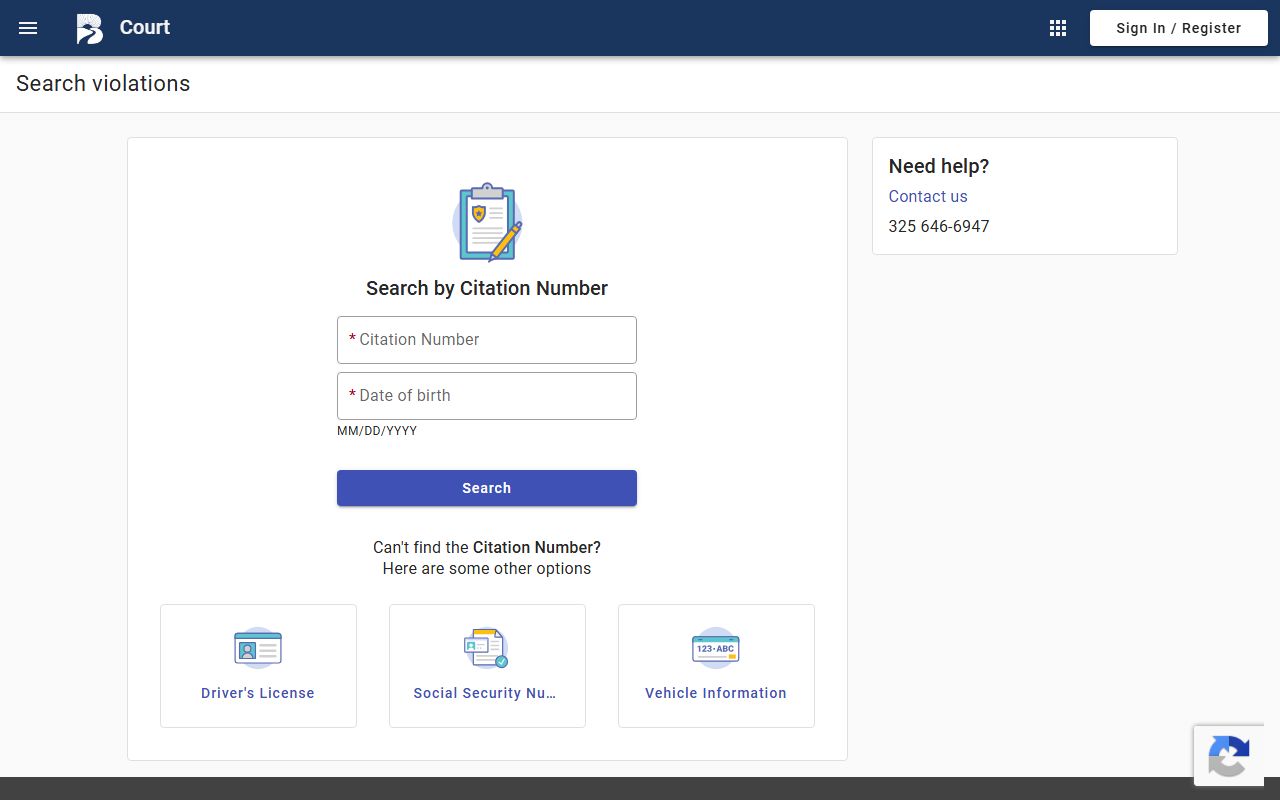
Brownwood Municipal Court is part of the same West Commerce public-safety complex described in city sources, but its online portal is for municipal court matters, not a Brown County jail roster or felony court index. The portal is useful for Brownwood municipal violations and citations after a city contact or arrest. The inspected portal supported searches by citation and date of birth, driver license and state, Social Security number and date of birth, or vehicle plate and state.
| Field Label | Type | Required | Notes |
|---|---|---|---|
| Citation Number | Text | Yes for citation search | Paired with date of birth. |
| Date of birth | Text/date | Required with several searches | Maximum length 10 in the portal field. |
| DL Number | Text | Yes for license search | Paired with state and date of birth. |
| State | Dropdown | Yes for license or vehicle search | State selector for license and plate searches. |
| Social Security Number | Text | Yes for SSN search | Paired with date of birth. |
| License Plate Number | Text | Yes for vehicle search | Paired with state. |
The Brownwood Municipal Court portal gives the city-specific court search interface.
Charge Status in Brown County Court Records
Charges can change after the jail arrest. A roster charge may be the arresting agency's first entry, while the court record reflects prosecutor review and clerk filing. That means a case may start with a different charge description, an added count, a reduced offense, or a dismissal. Court date fields on the jail profile may also be blank, so the clerk record is the better source for hearing status once a case exists.
| Status | What It Means |
|---|---|
| Pending | The charge is filed or active and has not reached final disposition. |
| Amended | The prosecutor or court record changed the charge, count, level, or wording. |
| Reduced | The filed offense was lowered, often through plea negotiation or prosecutor review. |
| Dismissed | The charge was dropped by court action or prosecutor request. |
| Convicted | The person was found guilty or entered a plea that resulted in judgment. |
Bond After a Brown County Arrest
Bond is both a jail-custody issue and a court-record issue. The Brown County roster profile has Bond and Bond Type columns by charge, and a sampled record showed Surety Bond as a bond type. Texas Code of Criminal Procedure Chapter 17 governs bail and bond conditions statewide. Brown County did not publish a separate jail bond-procedure page in the sources located, so the practical route is to review the inmate profile, call the jail before paying, and check the court record for orders that may change release terms.
| Bond Type | How It Works |
|---|---|
| Surety Bond | A licensed bondsman posts surety for the defendant after taking fee or collateral. |
| Cash Bond | The full cash amount is paid through the approved court or jail process, subject to local handling rules. |
| Personal Bond / PR Bond | A court-authorized release based on written promise to appear and conditions. |
| No Bond / Hold | Release is blocked until the court or holding agency changes the order or detainer. |
Warrants and Court Records After Arrest
No official Brown County sheriff active-warrant search page or countywide warrant list was located. That does not mean warrant information never appears. After a person is booked, the jail roster can show charge, court type, bond, charging agency, and arresting agency data that may point to a warrant or hold. Texas Code of Criminal Procedure Chapter 15 covers arrest warrants and magistrate procedures, while TCJS reporting also has bench-warrant categories in jail population workbooks.
For a warrant-related question, use the jail roster after booking, then call Brown County Jail at 325-641-2481 or the sheriff's office at 325-646-5510. Court-record questions may need the District Clerk, County Clerk, or Brownwood Municipal Court depending on case type. Brownwood Crime Stoppers accepts anonymous tips, but it should not be described as an official warrant lookup.
Charges vs Convictions
A Brown County arrest or filed charge is not the same as a conviction. A charge is an accusation that can be pending, amended, dismissed, or resolved by plea or trial. A conviction is a final judgment based on a guilty plea, no-contest plea with finding, or verdict. This distinction matters when reading court records after a jail arrest, because the existence of a booking or case does not prove guilt.
| Charge | Conviction | |
|---|---|---|
| Meaning | An allegation filed or recorded after arrest. | A final court judgment or accepted plea result. |
| Can Change | Yes, it may be amended, reduced, added, or dismissed. | Yes, but only through later court action such as appeal, set-aside, or record relief. |
| How to Verify | Check the current clerk record and prosecutor filing. | Read the final judgment or disposition in the court record. |
Sealed and Expunged Arrest Records
Texas has separate concepts for expunction and nondisclosure. Texas Code of Criminal Procedure Chapter 55A is the current expunction chapter and can remove eligible arrest records from public access after qualifying outcomes. Texas Government Code Chapter 411, Subchapter E-1 covers orders of nondisclosure, which seal eligible criminal-history record information from most public release without destroying every underlying record. Eligibility depends on the charge, disposition, prior record, waiting periods, and court order.
| Nondisclosure | Expunction | |
|---|---|---|
| Effect | Seals eligible criminal-history information from most public access. | Removes or destroys eligible arrest records as directed by court order. |
| Texas Law | Government Code Chapter 411 | Code of Criminal Procedure Chapter 55A |
| Public Use | Some agencies may still have access. | The arrest may be treated as not having occurred when the order applies. |
Restricted Brown County Court Records
Texas public access is broad, but not every record is released. The Texas Public Information Act allows exceptions for active law-enforcement and prosecution records, while Section 552.108(c) preserves public access to basic information about an arrested person, arrest, or crime. Juvenile records, sealed or expunged records, medical and mental-health information, victim-protection material, and certain discovery may be restricted. The District Attorney page also warns that some discovery cannot be disseminated under federal and state law.
Important: Do not use casual court or jail lookups for employment, tenant, credit, insurance, or other FCRA-covered screening.